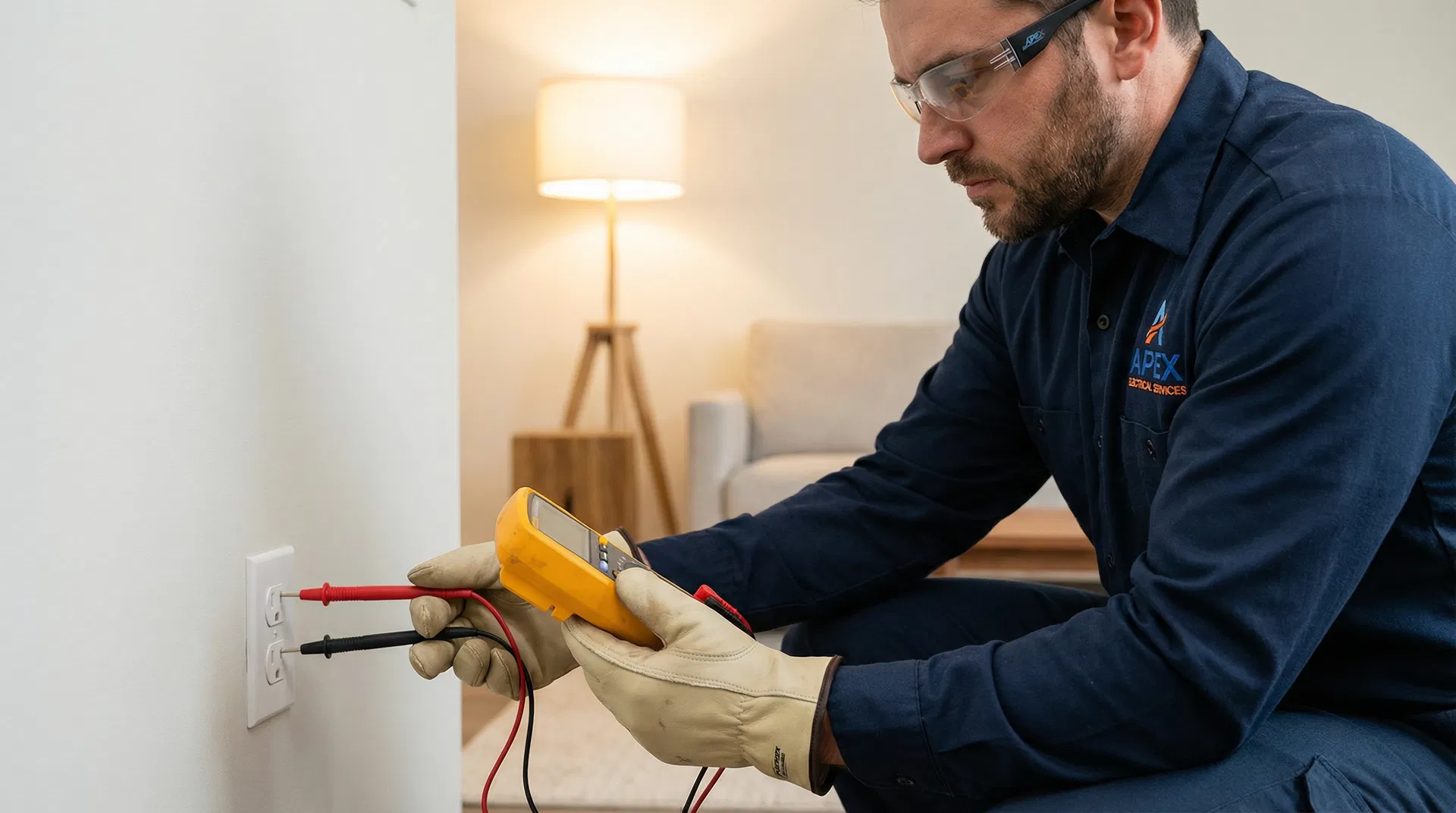
TL;DR
An electrical outlet stops working due to seven common causes: tripped circuit breaker, tripped GFCI outlet, switch-controlled (half-hot) outlet, blown fuse in older homes, faulty or burnt outlet, loose wiring or poor installation, and overloaded circuit. Most issues can be diagnosed through simple troubleshooting steps, but electrical work carries serious safety risks. If you see burn marks, smell burning odors, or feel heat from an outlet, turn off the breaker immediately and call a licensed electrician. Professional diagnosis typically costs $75-$150, while repairs range from $150-$500 depending on the cause.
Table of Contents
Safety Warning: Read This First
Electricity is dangerous. According to the Electrical Safety Foundation International, electrical failures or malfunctions cause an estimated 51,000 fires annually in the United States, resulting in nearly 500 deaths, 1,400 injuries, and $1.3 billion in property damage.
Before troubleshooting any outlet:
- •Unplug all devices from the dead outlet
- •Turn off the circuit breaker controlling that outlet before touching anything
- •Never touch wires or attempt repairs if you're not trained
- •Call immediately if you smell burning, see sparks, or feel heat
⚡ EMERGENCY:
If you notice any of these signs, turn off the breaker and call us immediately at 888-614-2692. We're available 24/7 for electrical emergencies.
Need Help Now? Our Licensed Electricians Are Standing By
Don't risk your safety. Professional diagnosis takes 15-30 minutes.
Average response time: 45 minutes | Same-day service available
1. Tripped Circuit Breaker
What it is: Circuit breakers are safety devices that automatically shut off power when a circuit draws too much electricity. When a breaker "trips," the switch moves to a middle position between ON and OFF.
Why it happens: Overloading occurs when you plug too many high-wattage devices into the same circuit. For example, running a space heater (1,500 watts), hair dryer (1,800 watts), and microwave (1,200 watts) on the same 15-amp circuit (1,800 watts maximum) will trip the breaker instantly.
How to identify it: Check your electrical panel. A tripped breaker will be in the middle position or feel loose when you touch it. Some panels have a red or orange indicator showing which breaker tripped.
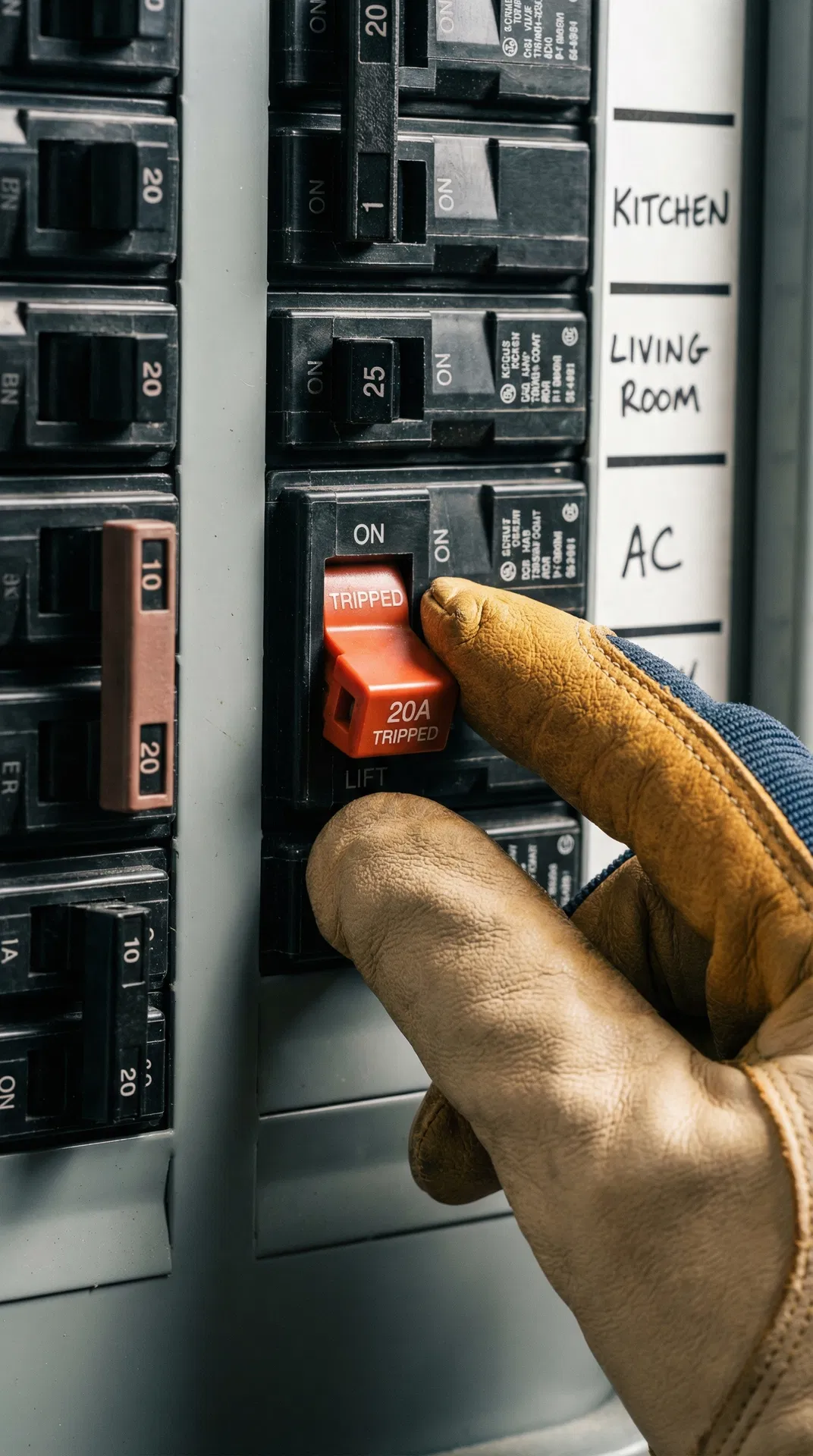
How to fix it:
- Unplug devices from the affected outlets
- Locate your electrical panel (usually in basement, garage, or utility room)
- Find the tripped breaker (middle position)
- Flip the breaker fully to OFF
- Then flip it back to ON
- Test the outlet
⚠️ When to call a pro:
If the breaker trips again immediately, you have a short circuit or ground fault that requires professional diagnosis. Repeated tripping indicates a serious electrical problem that could cause a fire.
2. Tripped GFCI Outlet
What it is: Ground Fault Circuit Interrupter (GFCI) outlets have built-in safety devices that detect electrical imbalances and shut off power within 1/30th of a second. They're required by electrical code in bathrooms, kitchens, garages, basements, and outdoor areas—anywhere within 6 feet of a water source.
Why it happens: GFCI outlets trip when they detect even a tiny amount of current leaking to ground (as little as 4-6 milliamps). This protects you from electrocution if a plugged-in device falls into water or if moisture enters the outlet.
How to identify it: GFCI outlets have two buttons in the center: TEST (usually black) and RESET (usually red). When tripped, the RESET button pops out slightly.
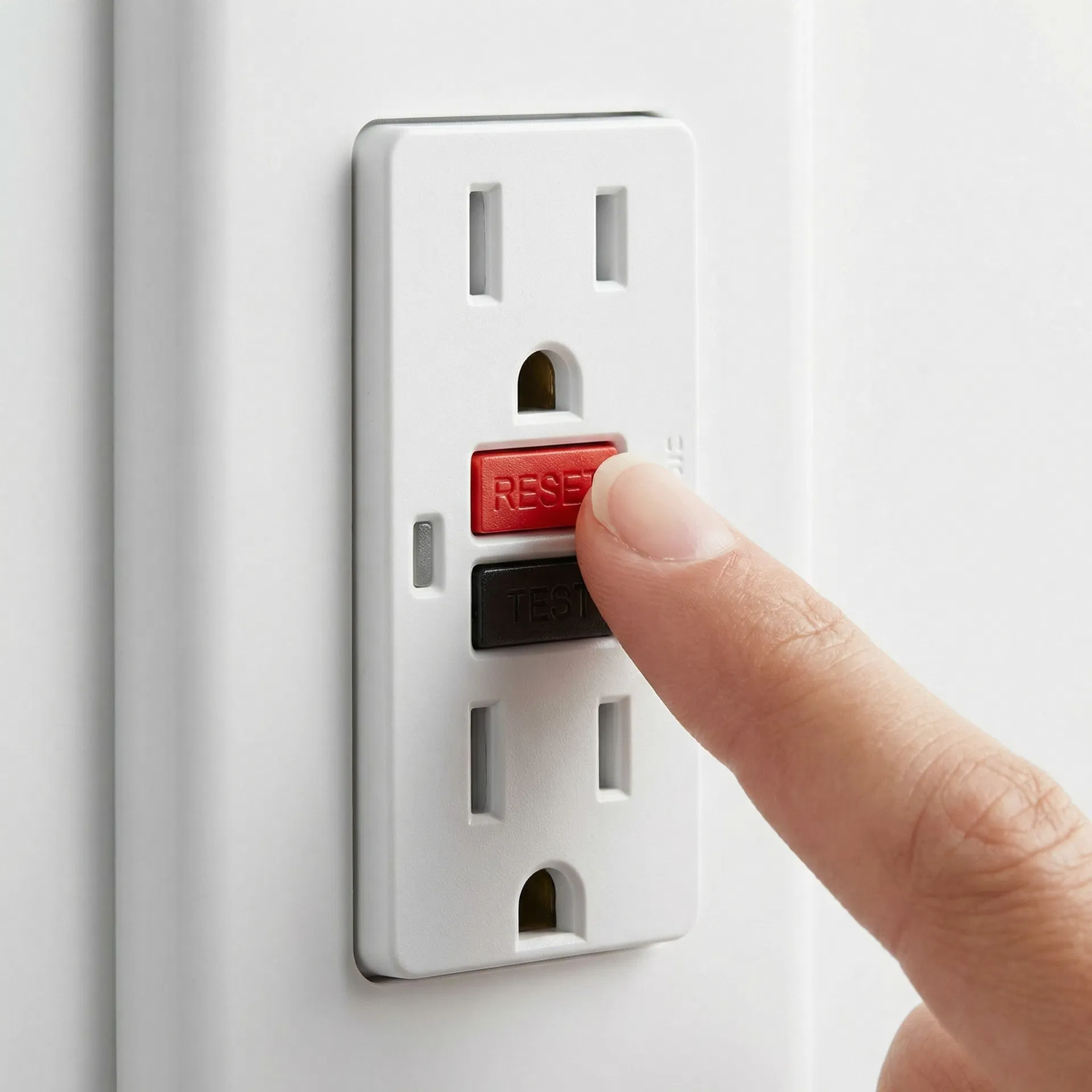
How to fix it:
- Press the RESET button firmly
- You should hear a click
- Test the outlet with a device
- If it works, you're done
💡 Important:
One GFCI outlet often protects multiple standard outlets downstream. If several outlets in your bathroom or kitchen stop working, check the GFCI outlet first—it's usually the one closest to the water source.
Electrical Issues Can Be Dangerous - Get Professional Help
Most outlet problems take 30-90 minutes to diagnose and repair. Don't risk your safety or your home.
Licensed & insured | Upfront pricing | No hidden fees
Cost Guide: What to Expect
| Service | Typical Cost | Timeline |
|---|---|---|
| Diagnosis/Service Call | $75-$150 | 15-30 minutes |
| Reset Circuit Breaker | $0-$75 | 5-10 minutes |
| Replace Standard Outlet | $150-$250 | 30-60 minutes |
| Replace GFCI Outlet | $200-$300 | 45-90 minutes |
| Repair Loose Wiring | $200-$400 | 1-2 hours |
| Circuit Upgrade (20A) | $300-$500 | 2-4 hours |
*Prices vary by location, complexity, and time of day. Emergency service (nights/weekends) may cost 1.5-2x standard rates.
Frequently Asked Questions
Can I fix an outlet myself?
You can safely reset a tripped circuit breaker or GFCI outlet. However, any work involving opening the outlet, touching wires, or replacing components should be done by a licensed electrician. Electrical work is dangerous and mistakes can cause fires or electrocution.
Why did only one outlet stop working?
If only one outlet is dead, it's likely a faulty outlet, loose wiring at that specific location, or a tripped GFCI outlet upstream that's protecting it. Check for GFCI outlets in the same room first.
How long does it take to fix a dead outlet?
Simple fixes (resetting breakers or GFCI) take 5-10 minutes. Replacing an outlet takes 30-90 minutes. Diagnosing and repairing wiring issues can take 1-3 hours depending on accessibility.
Is a dead outlet an emergency?
A dead outlet is an emergency if you smell burning, see sparks, notice scorch marks, or feel heat. Otherwise, it's a safety concern that should be addressed within 24-48 hours.
Will my homeowner's insurance cover outlet repairs?
Standard outlet repairs are typically not covered as they're considered maintenance. However, if the outlet failure caused a fire or other covered damage, that damage may be covered. Check your policy.
Don't Put Your Family at Risk Another Minute
Our licensed electricians are available now for same-day service
Average pickup time: 30 seconds | 45-minute response time