TL;DR
Circuit breakers trip to protect your home from electrical fires and damage. The eight most common causes are: circuit overload (too many devices on one circuit), short circuit (hot wire touching neutral wire), ground fault (hot wire touching ground), arc fault (damaged wiring causing sparks), old or faulty breaker (worn out mechanism), moisture damage (water in electrical components), loose wire connections (poor contact causing arcing), and faulty appliance (defective device drawing excessive current).
When to call an electrician: If your breaker trips repeatedly after resetting, trips immediately when reset, or you see burn marks, smell burning, or hear buzzing sounds. Professional diagnosis costs $75-$150, while repairs range from $150-$500 depending on the cause.
Table of Contents
You're in the middle of cooking dinner when suddenly the lights go out in the kitchen. You head to your electrical panel and discover—again—that the circuit breaker has tripped. This is the third time this week. What's going on?
Circuit breakers are designed to trip when they detect an electrical problem, protecting your home from fires and electrical damage. While an occasional trip is normal, repeated tripping indicates a serious issue that needs attention. This comprehensive guide covers the eight most common causes of circuit breaker tripping, how to diagnose them, and when you need professional help.
1. Circuit Overload (Most Common Cause)
Circuit overload is the number one reason circuit breakers trip, accounting for approximately 60% of all tripping incidents. An overload occurs when you try to draw more electrical current through a circuit than it's designed to handle.
How Circuit Overload Happens
Every circuit in your home is rated for a specific amperage—typically 15 or 20 amps for standard household circuits. When the combined electrical draw of all devices on that circuit exceeds its rated capacity, the breaker trips to prevent the wiring from overheating and potentially causing a fire.
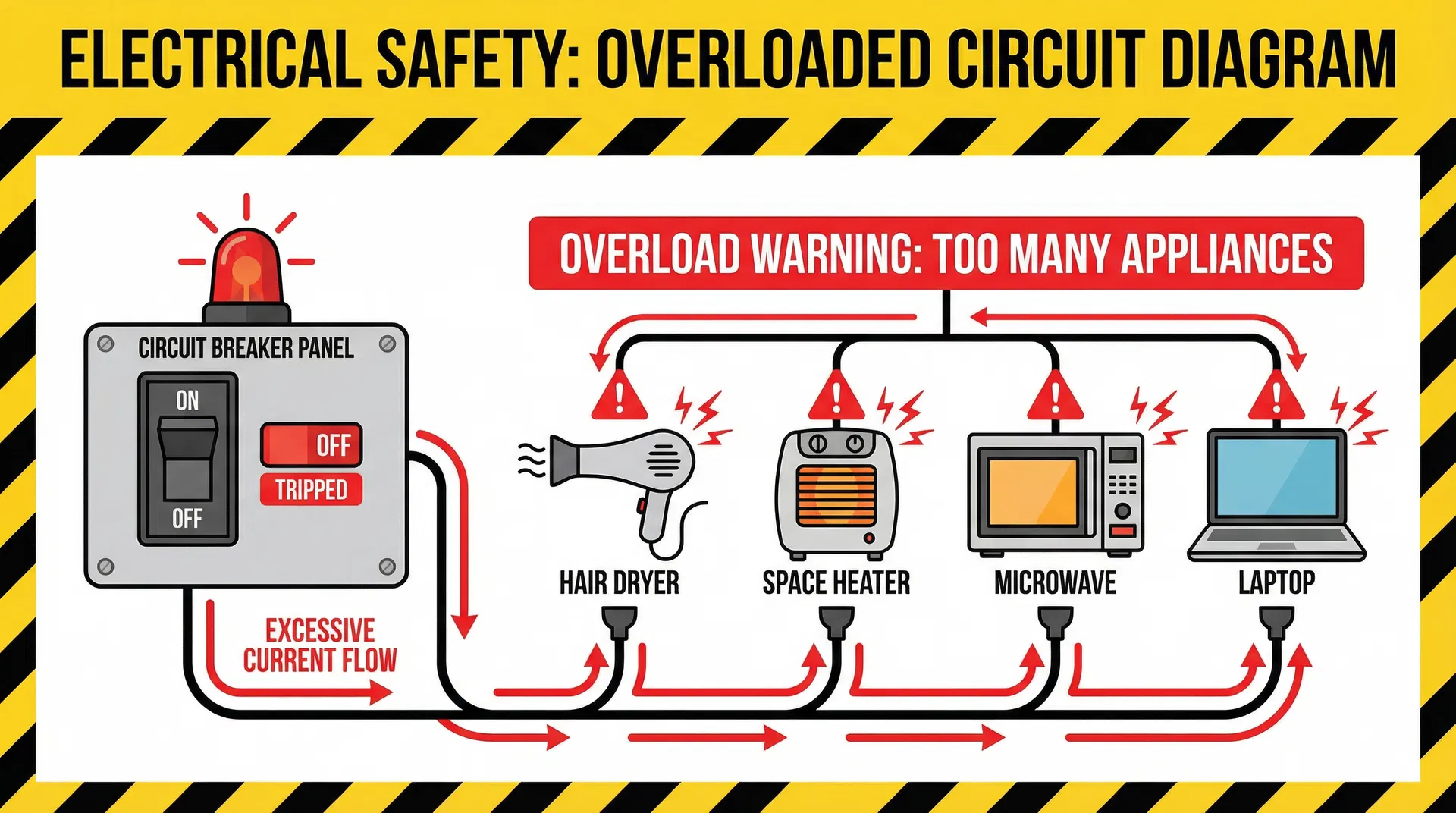
Example: Multiple high-wattage appliances on a single circuit causing overload
Common Overload Scenarios
- Running a hair dryer and space heater on the same bathroom circuit
- Plugging a microwave, toaster, and coffee maker into the same kitchen circuit
- Using multiple power tools simultaneously in a garage or workshop
- Connecting too many devices to a single power strip
How to Fix Circuit Overload
DIY Solutions:
- Unplug devices from the overloaded circuit and redistribute them to other circuits
- Avoid using multiple high-wattage appliances simultaneously on the same circuit
- Replace power strips with surge protectors that have built-in circuit breakers
- Identify which devices are on each circuit by testing outlets systematically
When to Call an Electrician:
If redistributing devices doesn't solve the problem, you may need a dedicated circuit installed for high-demand appliances. Modern homes typically need more circuits than older homes to handle today's electrical demands. An electrician can install new circuits for $300-$800 depending on complexity.
| Appliance | Typical Amperage | Dedicated Circuit? |
|---|---|---|
| Microwave | 10-15 amps | Recommended |
| Space Heater | 12-15 amps | Recommended |
| Hair Dryer | 10-12 amps | No |
| Window AC Unit | 8-13 amps | Yes |
| Refrigerator | 6-8 amps | Yes |
2. Short Circuit
A short circuit is a more serious electrical problem that occurs when a hot (live) wire comes into direct contact with a neutral wire. This creates a path of very low resistance, allowing a massive surge of current to flow through the circuit—far more than the wiring can safely handle.
Why Short Circuits Are Dangerous
Unlike an overload where current gradually increases, a short circuit causes an instantaneous spike in current. This can generate extreme heat in a fraction of a second, potentially melting wire insulation, igniting nearby materials, or causing an electrical fire. This is why circuit breakers are designed to trip immediately when they detect a short circuit.

Warning signs of a short circuit: burn marks and melted plastic
Common Causes of Short Circuits
- Damaged wire insulation: Rodents chewing wires, nails driven through walls, or age-related deterioration
- Loose connections: Wires coming loose in outlets, switches, or junction boxes
- Faulty appliance wiring: Internal shorts within appliances or power cords
- Water damage: Moisture causing wires to corrode and touch
Signs of a Short Circuit
⚠️ DANGER SIGNS - Call an Electrician Immediately:
- Breaker trips immediately when you reset it
- Burning smell near outlets, switches, or the electrical panel
- Visible burn marks or discoloration around outlets
- Sparks or popping sounds when plugging in devices
- Buzzing or sizzling sounds from outlets or switches
DO NOT attempt to fix a short circuit yourself. Short circuits require professional diagnosis and repair. An electrician will use specialized testing equipment to locate the fault and make safe repairs. Typical repair costs range from $200-$500 depending on the location and severity of the short.
⚡ Not Sure What's Causing Your Breaker to Trip?
Our licensed electricians can diagnose the problem in minutes. Don't risk electrical fire—get professional help now.
Call 888-614-2692 - Free Diagnosis QuoteAverage response time: 45 minutes
3. Ground Fault
A ground fault occurs when a hot wire comes into contact with a ground wire or a grounded part of your electrical system (like a metal electrical box or appliance chassis). Similar to a short circuit, this creates an unintended path for electricity to flow, but instead of flowing to the neutral wire, it flows to the ground.
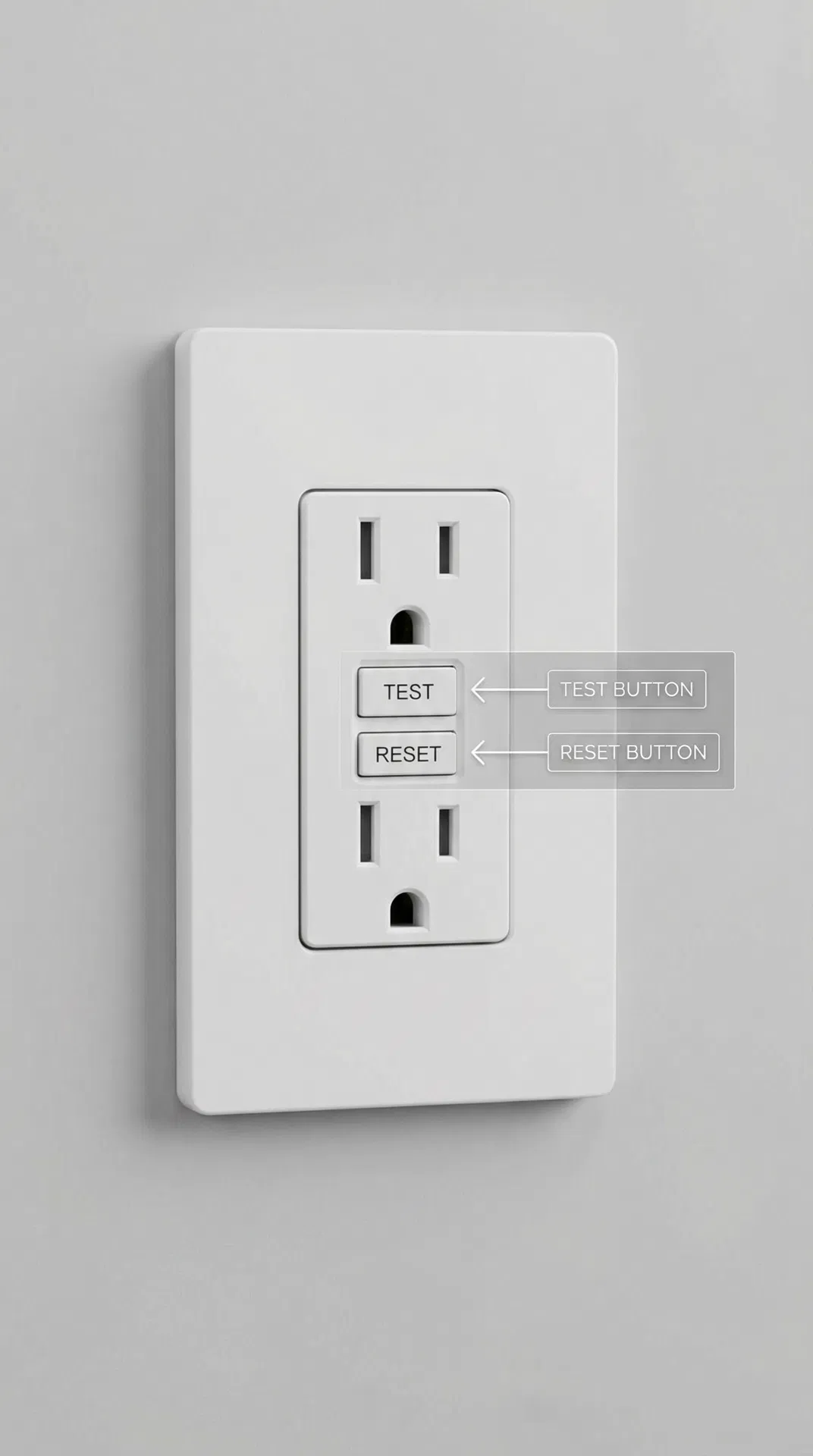
GFCI outlets protect against ground faults in wet locations
GFCI Protection
Ground Fault Circuit Interrupter (GFCI) outlets and breakers are specifically designed to detect ground faults and shut off power within milliseconds. National Electrical Code requires GFCI protection in areas where water and electricity may come into contact: bathrooms, kitchens, garages, basements, and outdoor outlets.
Common Ground Fault Scenarios
- Using electrical appliances near water (hair dryers in bathrooms, power tools in wet basements)
- Damaged appliance cords exposing internal wiring
- Water infiltration into electrical boxes or outlets
- Worn insulation on wiring allowing contact with grounded metal
How to Fix Ground Faults
If a GFCI Outlet Trips:
- Unplug all devices from the GFCI outlet and any outlets downstream from it
- Press the "RESET" button on the GFCI outlet
- If it resets successfully, plug devices back in one at a time to identify the culprit
- If the GFCI won't reset or trips immediately, call an electrician
Important: Never bypass or disable GFCI protection. These devices prevent potentially fatal electric shocks. If your GFCI trips frequently, it's detecting a real problem that needs professional attention. Repair costs typically range from $150-$300 for outlet replacement or $200-$400 for wiring repairs.
Additional Common Causes
4. Arc Fault (AFCI Breakers)
Arc Fault Circuit Interrupter (AFCI) breakers detect dangerous electrical arcing—sparking that occurs when electricity jumps across a gap in damaged wiring. Modern homes built after 2002 require AFCI protection in bedrooms and living areas.
Common causes: Damaged wire insulation, loose connections, or faulty appliances. Cost to repair: $150-$400 depending on location of arc fault.
5. Old or Faulty Circuit Breaker
Circuit breakers don't last forever. After 25-30 years of use, the internal mechanism can wear out, causing nuisance tripping even when there's no actual electrical problem. Breakers can also fail prematurely due to manufacturing defects or exposure to moisture.
Signs of a bad breaker: Won't stay reset, feels loose, or trips at random times. Cost to replace: $150-$250 for a standard breaker, $200-$400 for GFCI/AFCI breakers.
6. Moisture or Water Damage
Water and electricity don't mix. Moisture in electrical components creates paths for current to flow where it shouldn't, causing ground faults or short circuits. This is especially common in basements, crawl spaces, and outdoor circuits.
Prevention: Ensure proper weatherproofing on outdoor outlets, fix roof leaks promptly, and use dehumidifiers in damp basements. Cost to repair: $200-$600 depending on extent of water damage.
7. Loose Wire Connections
Over time, wire connections can loosen due to thermal expansion and contraction, vibration, or improper installation. Loose connections create resistance, generate heat, and can cause arcing—all of which may trip your breaker.
Warning signs: Flickering lights, warm outlets or switches, buzzing sounds. Cost to repair: $150-$350 to tighten connections and ensure proper installation.
8. Faulty Appliance
Sometimes the problem isn't your home's wiring—it's a defective appliance. Internal shorts, motor problems, or damaged power cords can cause excessive current draw or create short circuits that trip your breaker.
How to identify: If the breaker only trips when a specific appliance is running, that appliance is likely the culprit. Unplug it and have it inspected or replaced. Cost: Appliance repair $100-$300 or replacement cost.
🔥 These Issues Can Cause Electrical Fires
Don't wait until it's too late. Our licensed electricians are available 24/7 for emergency repairs.
Call 888-614-2692 - Same-Day ServiceAverage pickup time: 30 seconds
Step-by-Step Troubleshooting Guide
Before You Start:
- Never touch electrical panels or wiring with wet hands
- Stand to the side when resetting breakers (not directly in front)
- If you smell burning or see smoke, call 911 and an electrician immediately
- When in doubt, call a professional—electrical work can be dangerous
Step 1: Identify the Tripped Breaker
Open your electrical panel and look for a breaker in the "OFF" position or in the middle position between ON and OFF. Some panels have a red indicator showing which breaker tripped.
Step 2: Unplug All Devices
Before resetting the breaker, unplug all devices and turn off all lights on that circuit. This prevents an immediate re-trip if one of the devices is faulty.
Step 3: Reset the Breaker
Push the breaker handle firmly to the OFF position, then back to ON. You should feel it click into place. If it won't stay in the ON position or trips immediately, stop and call an electrician—this indicates a serious problem.
Step 4: Test One Device at a Time
Plug in or turn on devices one at a time, waiting 30 seconds between each. If the breaker trips when you plug in a specific device, that device is likely faulty and should be repaired or replaced.
Step 5: Monitor for Repeat Trips
If the breaker stays on with all devices plugged in, monitor it for 24-48 hours. If it trips again without obvious cause, you likely have a wiring problem that requires professional diagnosis.
Cost Guide: What to Expect
| Service | Typical Cost Range | Time Required |
|---|---|---|
| Diagnostic Service Call | $75-$150 | 30-60 minutes |
| Replace Standard Breaker | $150-$250 | 1-2 hours |
| Replace GFCI/AFCI Breaker | $200-$400 | 1-2 hours |
| Repair Short Circuit | $200-$500 | 2-4 hours |
| Install New Dedicated Circuit | $300-$800 | 3-6 hours |
| Rewire Damaged Circuit | $400-$1,200 | 4-8 hours |
*Costs vary by location, complexity, and whether walls need to be opened. Emergency after-hours service typically costs 1.5-2x standard rates.
Frequently Asked Questions
How many times can I reset a tripped breaker?
You can reset a breaker as many times as needed, but if it trips more than 2-3 times, stop resetting it and call an electrician. Repeated tripping indicates a problem that needs professional diagnosis. Continuing to reset a breaker that keeps tripping can lead to overheating and fire risk.
Is it dangerous if my circuit breaker keeps tripping?
Yes, repeated tripping indicates an electrical problem that could lead to fire or shock hazards. While the breaker is doing its job by shutting off power, the underlying cause (short circuit, ground fault, damaged wiring) poses a serious safety risk that requires immediate attention.
Can I replace a circuit breaker myself?
While technically possible for experienced DIYers, replacing a circuit breaker is dangerous and requires working inside a live electrical panel. Most jurisdictions require licensed electricians to perform this work, and your homeowner's insurance may not cover damage from DIY electrical work. Professional replacement costs $150-$400 and is much safer.
Why does my breaker trip at night?
Breakers that trip at night often indicate an overload caused by appliances that run automatically (HVAC systems, refrigerators, water heaters) combined with other devices. Temperature changes can also affect electrical resistance. If this happens regularly, you may need a dedicated circuit for high-demand appliances.
What's the difference between a tripped breaker and a blown fuse?
Circuit breakers can be reset after tripping, while fuses must be replaced. Modern homes use circuit breakers, but older homes may still have fuse boxes. Both serve the same purpose—protecting your home from electrical overloads and faults. If you have a fuse box, consider upgrading to a modern circuit breaker panel for better safety and convenience.
How long do circuit breakers last?
Circuit breakers typically last 25-30 years under normal conditions. However, breakers that trip frequently may wear out faster. Signs of a failing breaker include difficulty staying in the ON position, a loose or wobbly feel, visible corrosion, or tripping without apparent cause. If your home is over 25 years old, consider having an electrician inspect your panel.
Can a bad outlet cause a breaker to trip?
Yes, a faulty outlet can cause breaker tripping through several mechanisms: loose wiring creating a short circuit, damaged internal components causing ground faults, or worn contacts creating excessive resistance and heat. If your breaker trips when you plug something into a specific outlet, have that outlet inspected and replaced if necessary.
Why does my GFCI keep tripping?
GFCI outlets trip when they detect even tiny amounts of current leaking to ground—as little as 4-6 milliamps. Common causes include moisture in the outlet, damaged appliance cords, or worn GFCI mechanisms. If your GFCI trips frequently, first try unplugging all devices and resetting it. If it still trips or won't reset, the GFCI itself may need replacement ($50-$150 installed).
Should I upgrade from 15-amp to 20-amp breakers?
Never upgrade breaker amperage without also upgrading the wiring. Breakers are sized to match the wire gauge—15-amp breakers protect 14-gauge wire, while 20-amp breakers protect 12-gauge wire. Installing a larger breaker on undersized wire removes the safety protection and creates a serious fire hazard. If you need more capacity, have an electrician install new circuits with properly sized wiring.
When should I call an electrician instead of resetting the breaker myself?
Call an electrician immediately if: the breaker trips immediately when reset, you smell burning or see smoke, there are visible burn marks or melted plastic, the breaker won't stay in the ON position, you hear buzzing or sizzling sounds, or the breaker trips repeatedly (more than 2-3 times) without obvious cause. These signs indicate serious electrical problems that require professional diagnosis and repair.
Don't Put Your Family at Risk Another Day
Electrical problems don't fix themselves—they get worse. Call now for same-day service.
TAP TO CALL NOW✓ Licensed & Insured | ✓ 15+ Years Experience | ✓ 50,000+ Repairs Completed
Average pickup time: 30 seconds | Average response time: 45 minutes